

Your solar panels work when the sun is shining. But what happens when it isn't?
Solar batteries are becoming an increasingly popular addition to residential solar systems in Malaysia. But there's one question homeowners should ask before investing in one:
Do you actually need a battery, or will solar panels alone do the job?
The answer depends on what you want your solar system to achieve.
1. What Does a Solar Battery Actually Do?
Solar panels generate electricity when sunlight is available. A solar battery stores electricity so it can be used later, typically in the evening or at night.
Here's how a solar and battery system generally works:
During the day: Solar panels generate electricity to power your home.
When there's excess generation: Available electricity can charge the battery.
After sunset: The battery can discharge stored energy to power your home.
When the battery runs low: Your home draws electricity from TNB as needed.
Think of a battery as a way to extend the usefulness of your solar generation beyond daylight hours.
However, batteries have limited storage capacity, and some energy is lost during charging and discharging.
2. Solar-Only vs Solar With Battery: What's the Difference?
Both systems generate electricity using solar panels. The main difference is what happens to electricity that isn't immediately used.
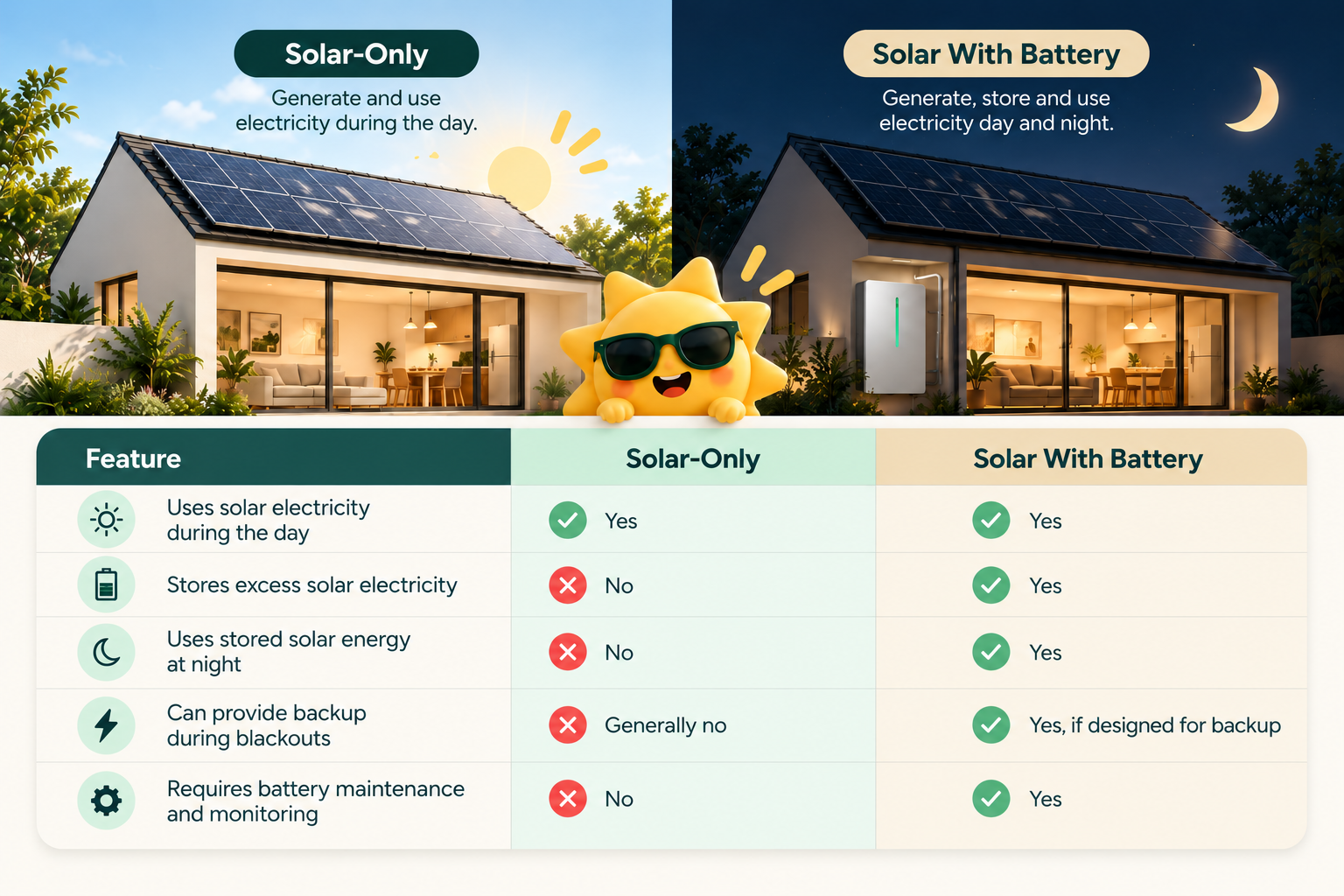
A solar-only system is simpler, while a battery-equipped system provides greater flexibility over when solar electricity can be used.
Neither is automatically the better choice for every household.
3. Can a Solar Battery Keep Your Lights On During a Blackout?
Yes, but only if your system is designed for backup power.
This is one of the most misunderstood features of residential solar batteries.
A battery doesn't automatically mean your entire house will continue operating during a power outage.
Backup capability depends on your hybrid inverter, battery configuration and electrical installation.
Some systems can support selected essential circuits, such as:
Lighting
Refrigerators
Wi-Fi routers
Security systems
Selected fans or power outlets
Other systems may be designed to support larger household loads.
Important: A standard grid-connected solar system typically shuts down during a TNB outage for safety. Backup operation requires compatible equipment and appropriate electrical isolation.
If blackout protection is your priority, make sure your quotation clearly specifies which appliances or circuits will remain powered.
4. How Long Can a Solar Battery Power Your Home?
Battery capacity is measured in kilowatt-hours (kWh), which tells you how much energy the battery can store.
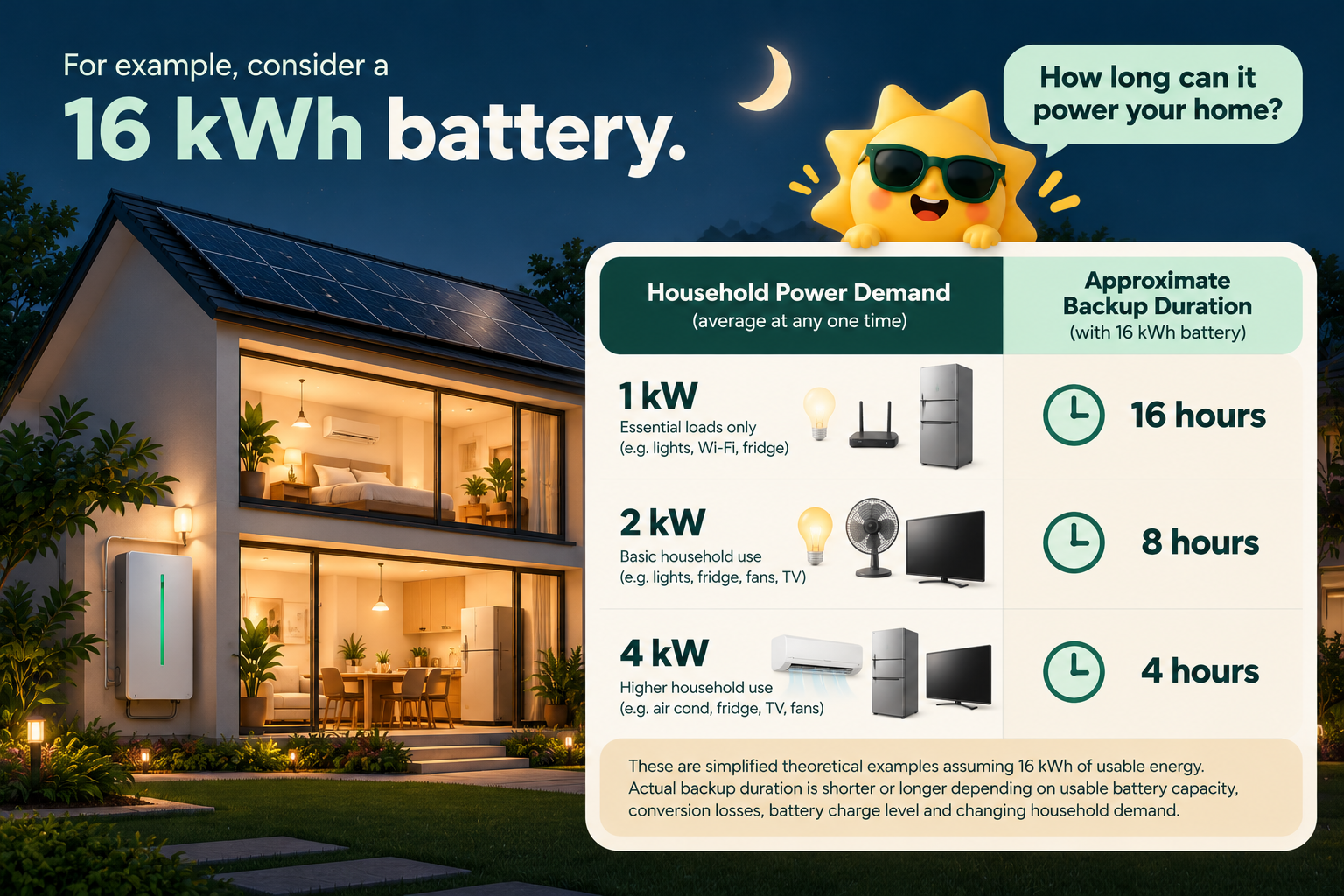
Battery capacity also shouldn't be confused with power output.
A battery may store enough energy to operate an appliance for several hours, but the inverter must also be capable of supplying the appliance's required power.
A bigger battery doesn't necessarily mean you can run every appliance simultaneously.
5. How Long Do Solar Batteries Last?
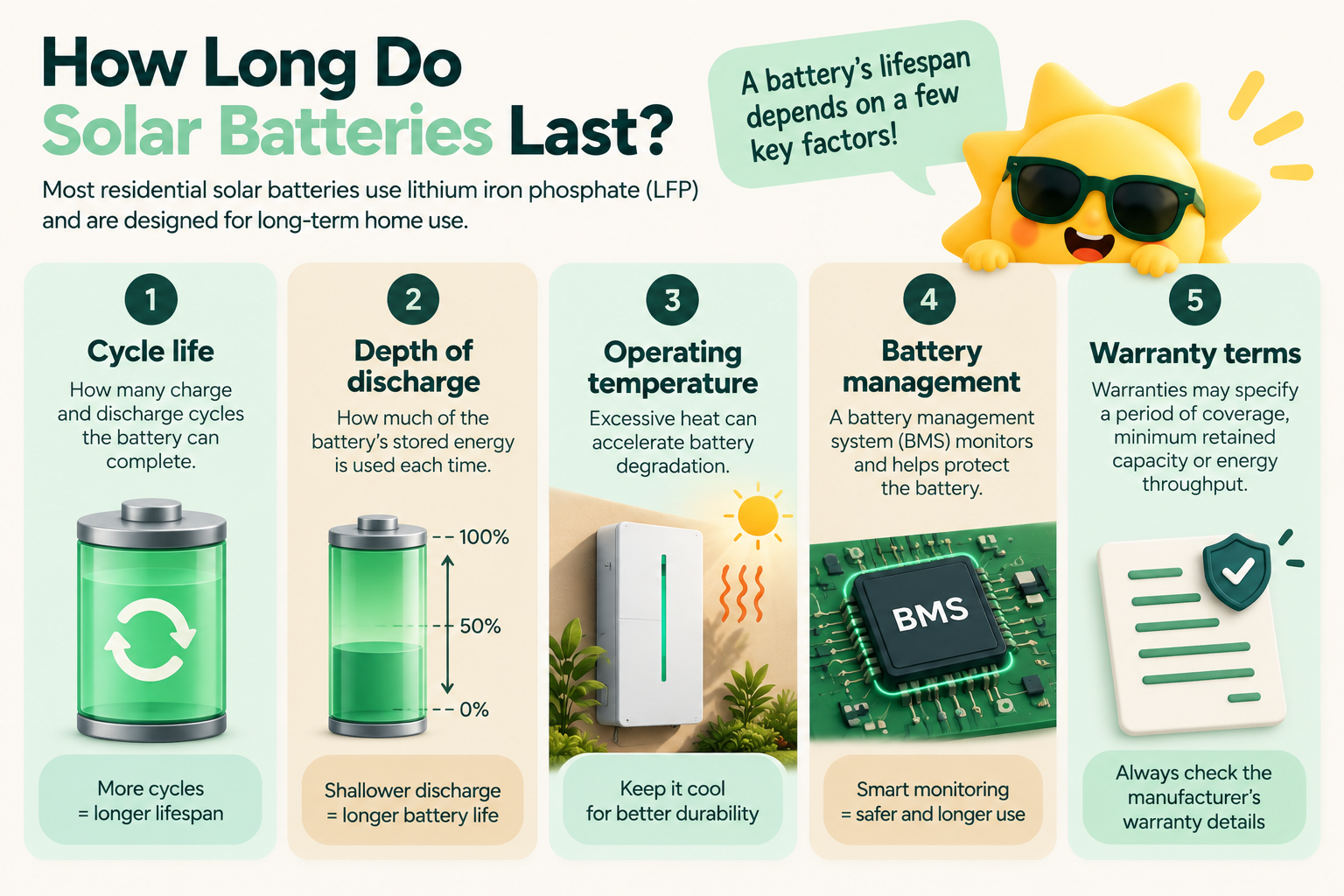
A solar battery’s lifespan depends on its cycle life, depth of discharge, operating temperature and battery management system (BMS). Choosing a quality battery and understanding its warranty terms can help ensure reliable, long-term performance.
6. Who Should Consider a Solar Battery?
A battery may be worth considering if:
You want blackout protection. A properly designed backup system can keep essential appliances running during outages.
Your household uses substantial electricity after sunset. Stored solar energy can help supply evening loads.
You work from home. Backup power may help maintain essential equipment and internet connectivity.
You want greater energy independence. A battery can reduce reliance on grid electricity during certain periods.
However, a battery isn't essential simply because you're installing solar panels.
If your main objective is to reduce electricity bills and backup power isn't a priority, a solar-only system may be the more economical starting point.
7. Can You Add a Solar Battery Later?
Yes, but compatibility matters.
Some hybrid inverters are designed to accommodate batteries, allowing homeowners to install solar panels first and add storage later.
Other systems may require additional equipment or inverter modifications.
Before choosing a battery-ready system, check:
Whether the inverter supports battery integration
Which battery brands and models are compatible
The supported battery voltage and capacity
Whether backup functionality requires additional equipment
Planning ahead can make future battery installation easier, even if you don't need storage immediately.
Storage Should Serve a Purpose.
A solar battery can offer greater flexibility, backup protection and more control over your electricity usage.
But that doesn't mean every home needs one.
The right question isn't whether you should have a battery. It's what you want your battery to do.
At Dalus Energy, we help homeowners understand their options and choose solutions that make sense for their needs.