

Why 30 years of roofing experience matters when installing solar panels.
You've got the roof space. You've got the sunlight. You've even found a solar package that fits your budget.
So, you're ready to install solar panels, right?
But here's a question most homeowners forget to ask: Can your roof actually support them safely for the next 25 to 30 years?
At Dalus Energy, we believe a good solar installation starts long before the first panel goes up.
And there's a reason we take roofs seriously.
We're a subsidiary of a roofing company with over 30 years of industry experience. So when we look at your roof, we're not just thinking about how many solar panels can fit. We're thinking about the structure, mounting methods, waterproofing and long-term protection of your home.
1. Can Every Roof Support Solar Panels?
Not necessarily.
A roof might look perfectly fine from the ground, but that doesn't automatically mean it's ready for solar.
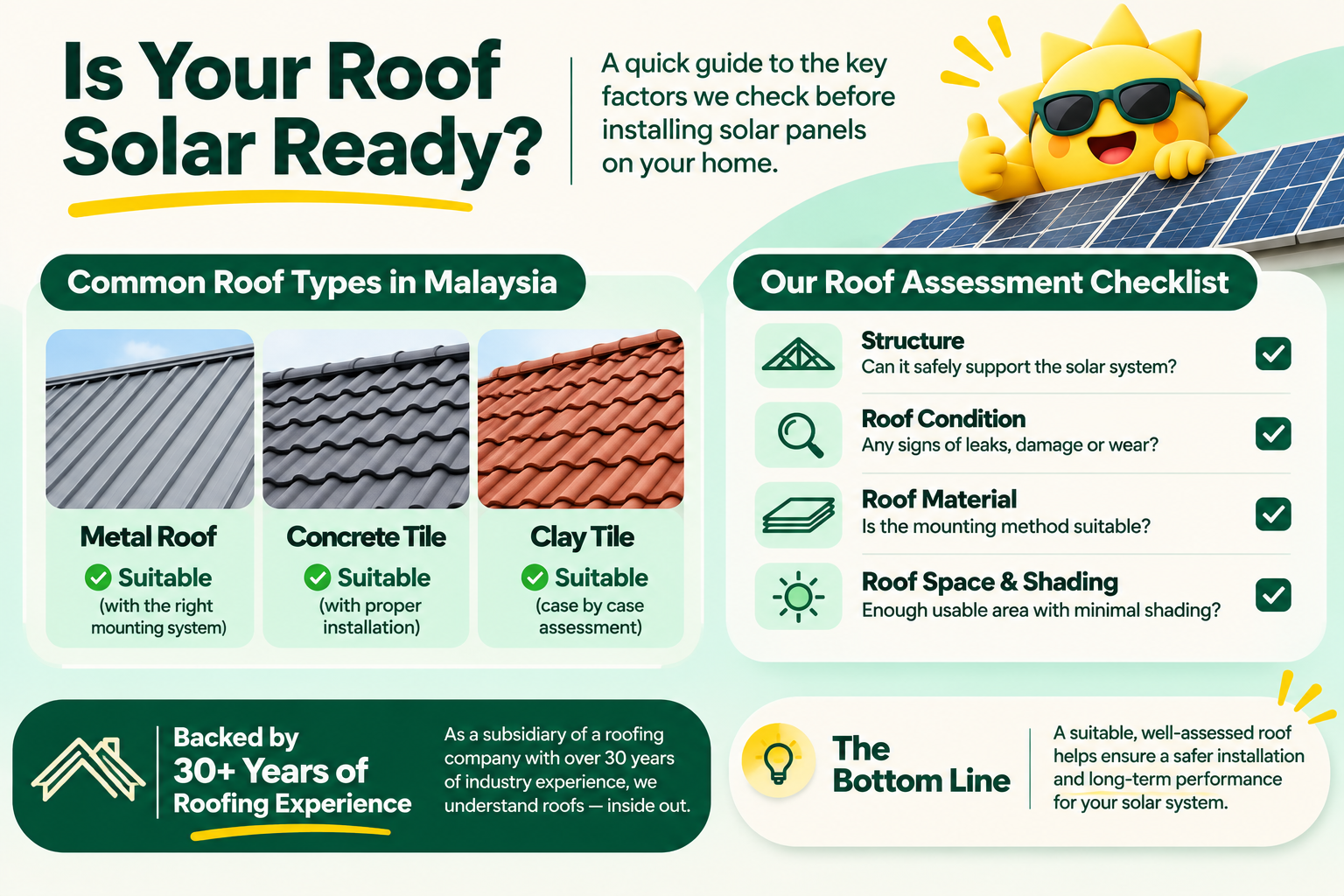
Before installation, several factors need to be considered:
Roof structure: Can it safely support the additional weight and wind loads?
Roof condition: Are there existing leaks, corrosion or damaged roofing materials?
Roof material: Is the mounting method suitable for your roof type?
Roof layout: Is there enough usable space without excessive shading?
Solar panels are a long-term investment. Your roof needs to be ready for one too.
2. How Heavy Are Solar Panels?
A modern residential solar panel can weigh approximately 25–35 kg, depending on its size and model.
Now imagine installing 10, 16 or even 24 panels.
That's a considerable amount of additional equipment on your roof, even before accounting for mounting structures and other installation loads.
But here's something important: it's not just about the total weight. It's about how that weight is supported and distributed.
A proper assessment should consider the roof structure, fixing points and relevant wind loads, rather than assuming every roof can carry the same solar system.
3. Will Installing Solar Panels Cause Roof Leaks?
This is one of the biggest concerns homeowners have. And understandably so.
A properly designed and installed solar mounting system should not cause roof leaks.
However, unsuitable mounting methods, poor sealing or damage to existing roofing materials can create problems.
Different roofs require different approaches.
Metal roofs, concrete tiles and other roofing systems have their own installation considerations. There isn't one mounting method that's right for every home.
That's why understanding the roof itself matters just as much as understanding the solar equipment.
4. We're Not Just Thinking About Your Solar Panels. We're Thinking About Your Roof.
Here's something that makes Dalus Energy different.
We're backed by over 30 years of roofing industry experience through our parent company.
That roofing background shapes how we approach solar installations.
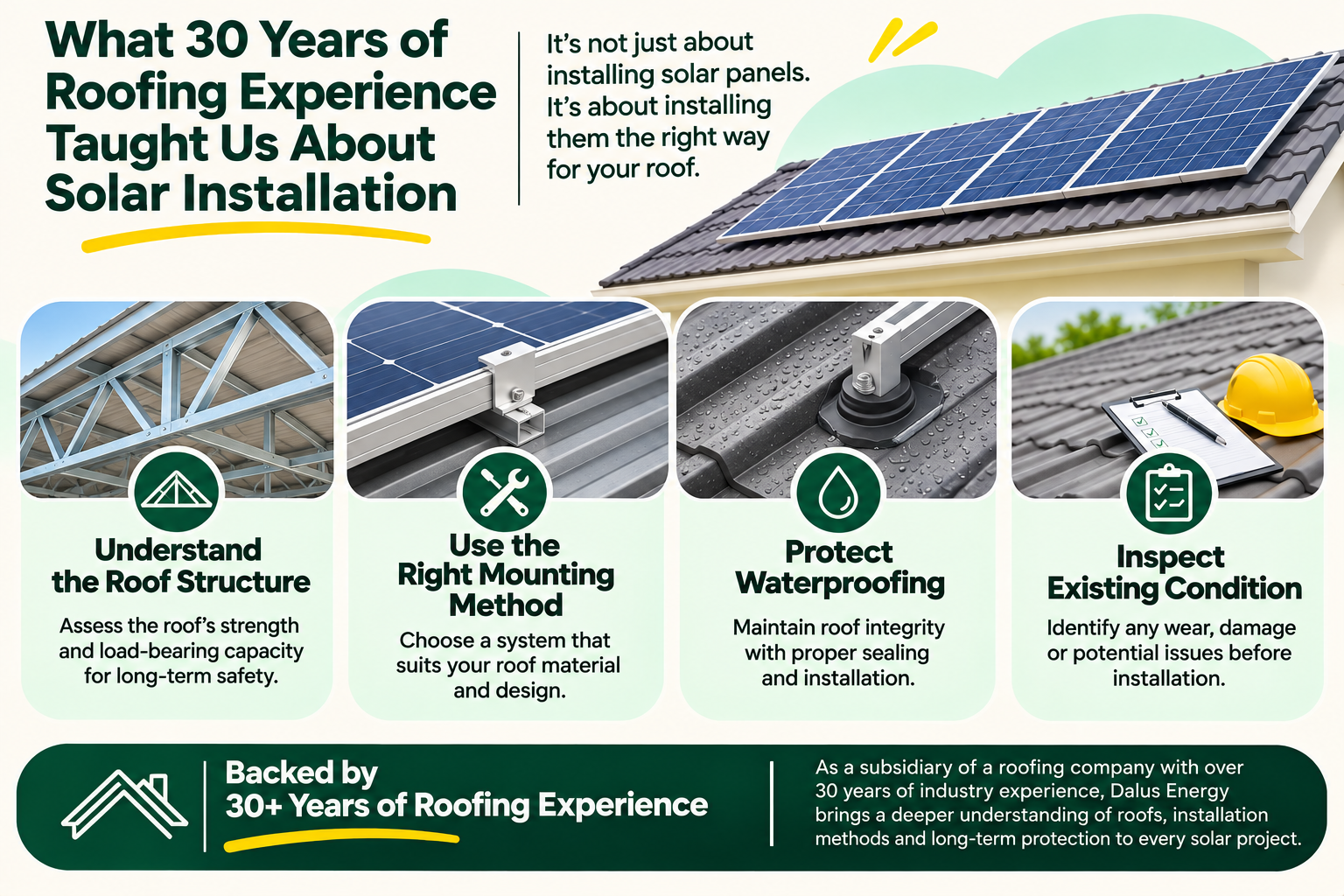
We understand the importance of roof materials, structural considerations, appropriate fastening methods and waterproofing details.
Because a solar installation shouldn't just look good on your roof today. It should be designed with the long-term condition of your home in mind.
And let's be practical.
What's the point of saving on your electricity bill if you're spending those savings fixing your roof?
That's why we believe getting the installation right matters more than simply getting it done quickly.
5. What If Your Roof Is Already Old?
If your roof is showing signs of deterioration, it's worth addressing those issues before installing solar.
Look out for:
Rusting or damaged metal roofing
Cracked or displaced roof tiles
Existing water leaks
Deteriorating roof components
Structural concerns that require professional assessment
Installing solar panels over an existing roofing problem doesn't make that problem disappear.
In some cases, repairing or replacing parts of the roof before installation may be the smarter long-term decision.
After all, you don't want to remove an entire solar system a few years later just to fix something that could have been addressed beforehand.
6. What Happens During a Solar Roof Assessment?
Before recommending a solar system, a proper site assessment helps determine whether your roof is suitable.
At Dalus Energy, we consider more than just the number of panels that can fit.
We look at roof condition, available installation space, shading, mounting suitability and electrical requirements. Where structural capacity cannot be established through a visual assessment, further evaluation by a qualified professional may be necessary.
The goal isn't simply to install the biggest system possible.
It's to recommend a system that works for your home, your electricity consumption and your roof.
7. Installing Solar Panels in Klang, Selangor?
Whether you live in Bandar Bukit Tinggi, Bandar Botanic, Bandar Parklands or elsewhere in Klang, your roof deserves the same attention as your solar system.
Different homes have different roof structures, materials and conditions. That's why a tailored assessment matters.
At Dalus Energy, we combine solar engineering with the roofing knowledge inherited from our parent company's more than 30 years of industry experience.
We want homeowners to feel confident not only about their future electricity savings, but also about the quality of the installation above their heads.
Solar panels are designed to deliver electricity for decades.
But a successful solar installation isn't just about choosing good panels and inverters.
It's also about making sure the roof underneath them is suitable, properly assessed and protected throughout the installation.
Before we understood solar panels, we understood roofs.
And that's the experience we bring to every Dalus Energy project.