

Malaysia gets plenty of sunshine. But let's be real, we also get plenty of rain.
One minute, the sun is blazing. The next, dark clouds roll in, and you're caught in a thunderstorm.
So, if you're considering solar panels, you might wonder: What happens when it rains? Do my panels stop working? And what about the monsoon season?
The good news? Solar panels don't need perfectly sunny skies to generate electricity.
Here's what you should know.
1. Do Solar Panels Work on Cloudy and Rainy Days?
Yes! Solar panels can still generate electricity when it's cloudy or raining.
Solar panels convert sunlight into electricity, including the diffuse sunlight that passes through clouds.
However, the amount of electricity generated depends on how much sunlight reaches the panels.
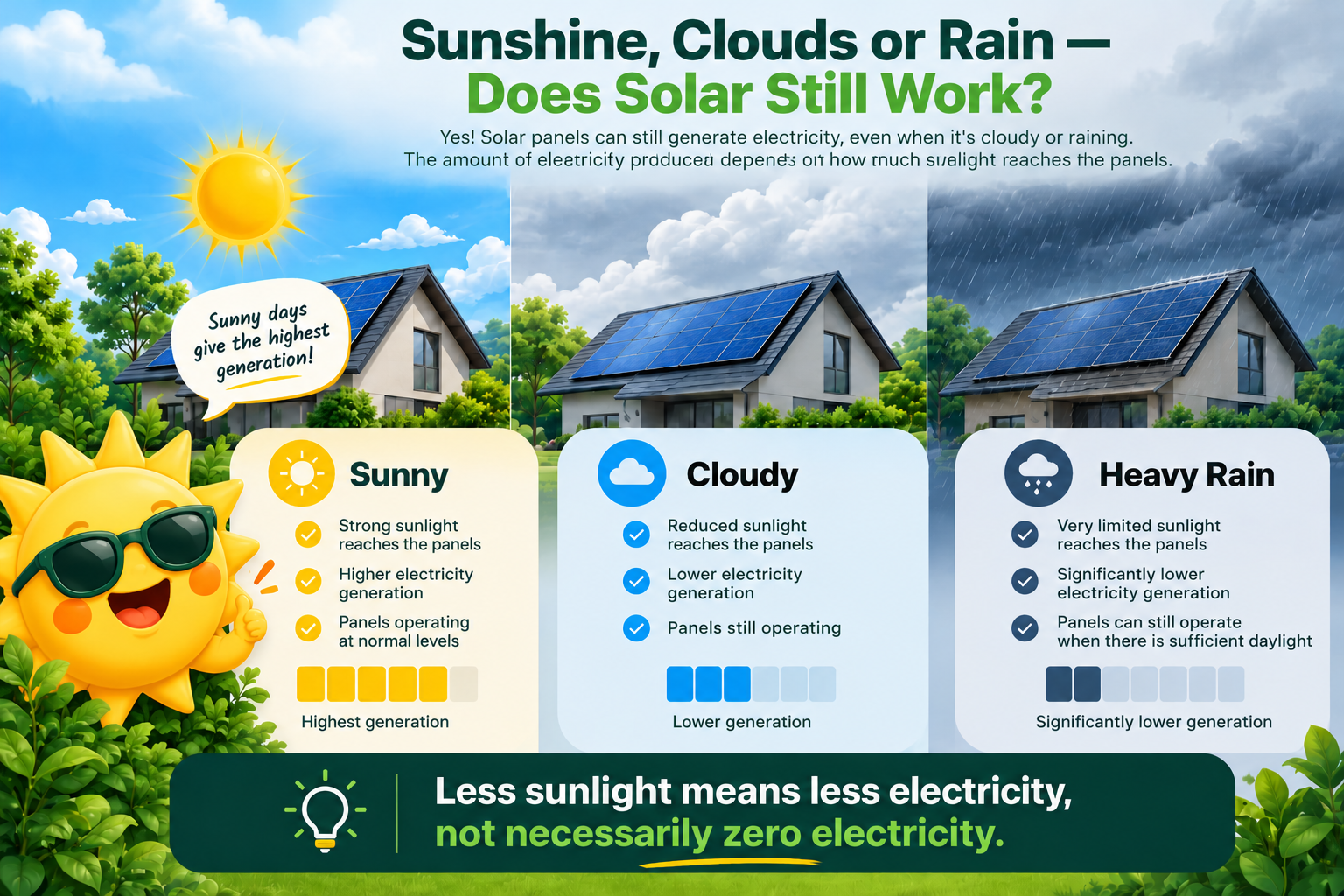
Even during heavy rain, solar panels may continue generating electricity, although output can fall significantly.
The takeaway? Less sunlight means less electricity, not necessarily zero electricity.
2. What About Malaysia's Monsoon Season?
Malaysia's tropical climate brings seasonal rainfall, cloudy afternoons and occasional stretches of gloomy weather.
Naturally, this affects how much electricity your solar panels generate.
But here's something homeowners often overlook:
Your solar system shouldn't be judged by one rainy afternoon.
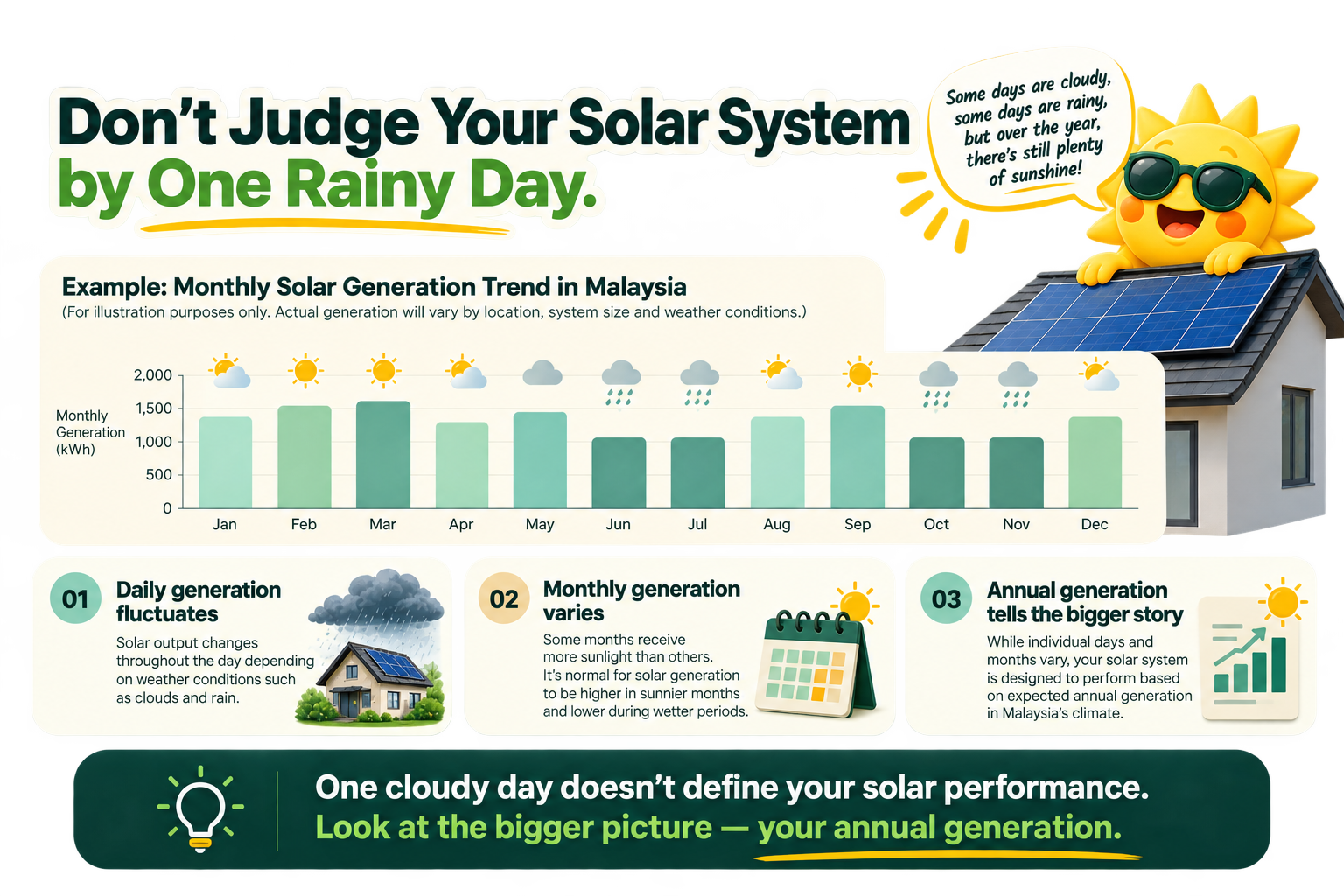
Solar generation fluctuates daily and monthly. That's why looking at annual electricity generation gives you a more meaningful picture of your system's expected performance.
A well-prepared solar proposal should account for local weather patterns, roof conditions and potential shading rather than assuming every day will be sunny.
3. Can Rain Actually Clean Your Solar Panels?
Surprisingly, yes!
Rain can help wash away loose dust and dirt, allowing more sunlight to reach your panels.
However, stubborn stains, bird droppings and accumulated grime may still require professional cleaning.
Rain helps, but it doesn't replace proper maintenance.
4. Does Malaysia's Hot Weather Make Solar Panels More Efficient?
Here's something that might surprise you.
Solar panels love sunlight, but they don't necessarily love extreme heat.
Although strong sunlight generally increases electricity generation, high panel temperatures can actually reduce the efficiency of most conventional silicon solar panels.
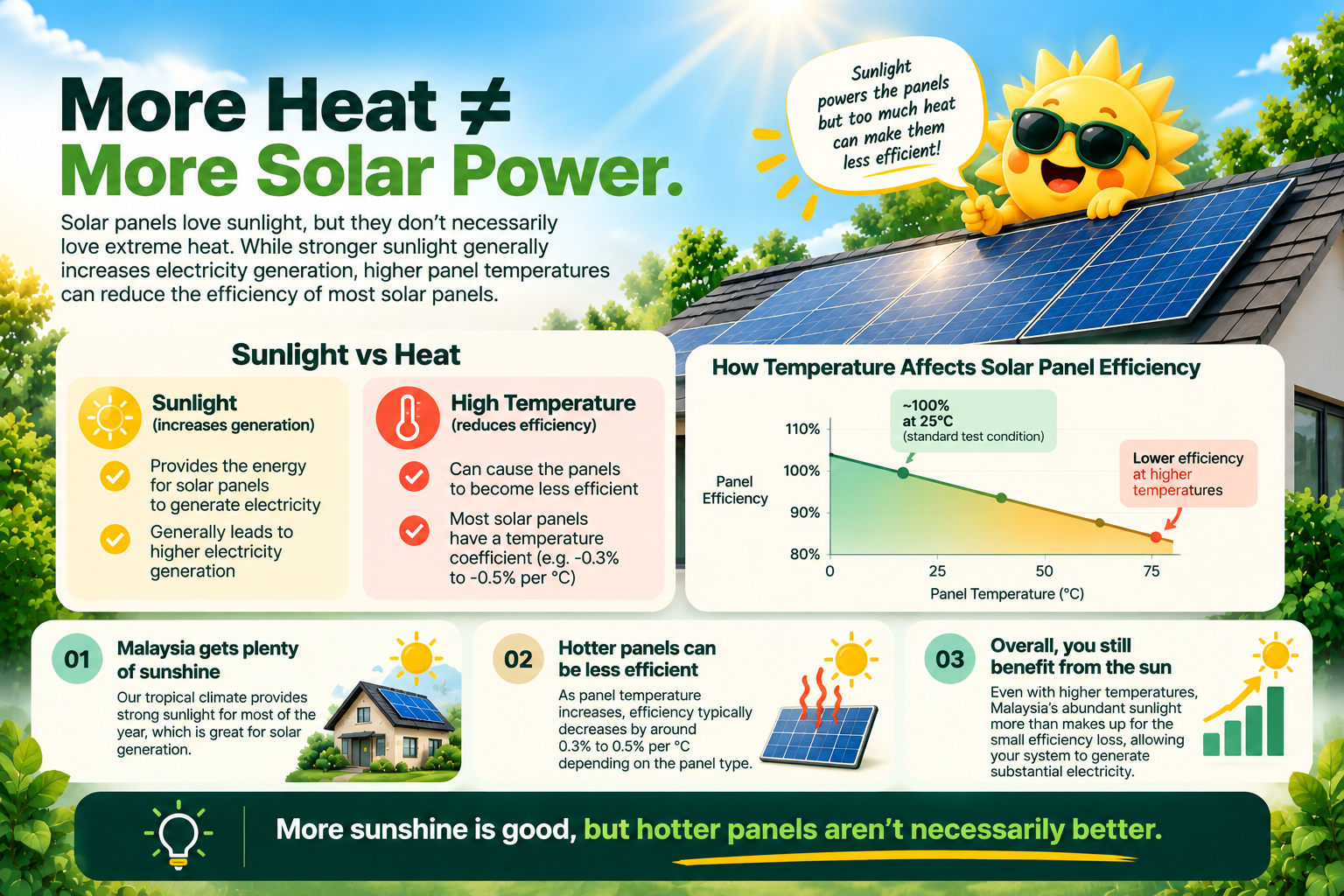
This is why solar panel specifications include a temperature coefficient, which indicates how performance changes as panel temperature increases.
Simply put, more sunshine is good, but hotter panels aren't necessarily better.
5. How Does Dalus Energy Account for Malaysia's Weather?
At Dalus Energy, we believe homeowners deserve realistic expectations, not just impressive-looking numbers.
When assessing your home, we consider roof conditions, potential shading, system configuration and expected solar generation.
Our goal isn't to promise perfect production every day.
It's to help you understand what your solar system can realistically achieve throughout the year.
A Little Rain Doesn't Ruin Your Solar Plans
Malaysia's weather may be unpredictable, but solar panels can still generate electricity on cloudy and rainy days, just at reduced output.
Rather than focusing on individual rainy days, what matters is your system's overall annual performance.
After all, solar isn't about perfect weather. It's about making the most of Malaysia's sunshine.