

You've said yes to solar. So, what happens next?
Installing solar panels isn't quite as simple as placing them on your roof and flipping a switch.
Behind every completed solar installation is a series of assessments, designs, applications and safety checks that ensure your system is ready to operate.
If you're wondering what happens between signing your quotation and generating your first kilowatt-hour, here's what to expect.
1. Site Assessment: Getting to Know Your Home
Before installation begins, your solar provider needs to understand the property.
During a site assessment, the technical team may inspect:
Roof condition: Checking roofing materials, structural considerations and potential installation obstacles.
Electrical infrastructure: Identifying the distribution board, existing electrical connections and cable routes.
Installation access: Assessing how equipment and materials can be safely transported and installed.
Equipment locations: Identifying suitable positions for the inverter and other electrical components.
This assessment helps identify potential challenges before installation day.
A good solar installation starts with understanding the property, not just the rooftop.
2. Final System Design: Turning Plans Into Reality
Once the site conditions are confirmed, the engineering team finalises the installation design.
This includes determining the panel arrangement, mounting configuration, inverter location and electrical connection routes.
The team also prepares the necessary technical drawings and documentation.
Any adjustments required following the site assessment should be communicated to the homeowner before work proceeds.
The objective is simple: ensure the proposed installation can be carried out safely and correctly.
3. Applications and Approvals: Getting the Paperwork Right
For residential installations under Malaysia's Solar ATAP programme, the relevant application and approval requirements must be addressed.
Depending on the project, this may involve documentation relating to the proposed solar capacity, electrical design and existing TNB supply.
At Dalus Energy, we handle the applicable Solar ATAP application process as part of our residential solar installation service.
Application processing times can vary, so the overall project schedule should account for the necessary approvals.
4. Installation Day: What Actually Happens?
This is when your solar system starts taking shape.
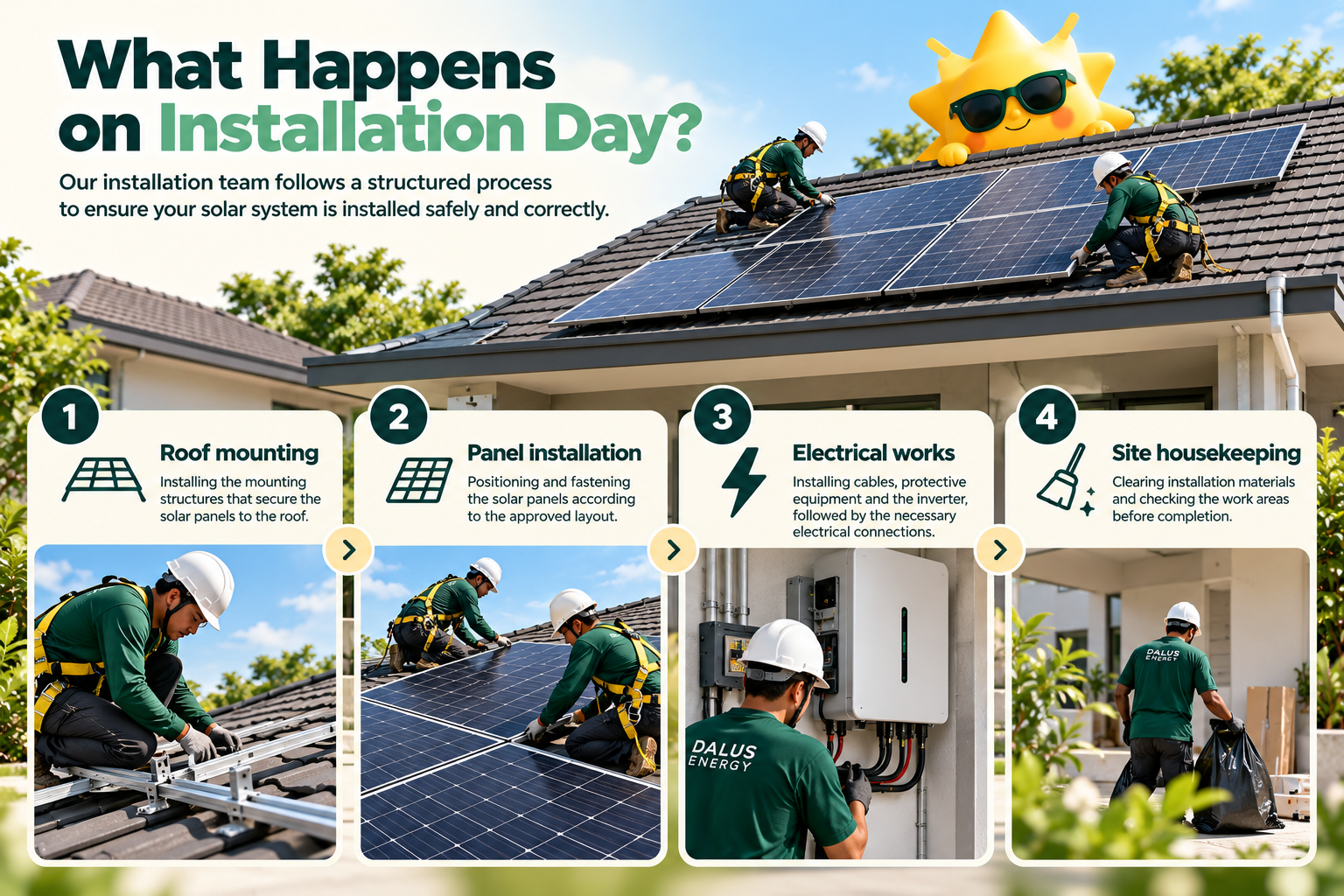
Homeowners should expect some activity around the property, including workers accessing the roof and electrical installation areas.
A temporary power interruption may also be necessary during certain electrical works.
Your installation team should inform you beforehand if an interruption is required.
5. Testing and Commissioning: Before the Switch Goes On
Once the physical installation is complete, the system must undergo appropriate inspections and electrical testing.
These checks may include:
Verifying electrical connections and cable polarity
Checking insulation resistance and protective earthing
Confirming inverter settings and protection functions
Inspecting mounting and installation workmanship
Verifying system operation and monitoring connectivity
Any issues identified should be rectified before the system is placed into normal operation.
Installation completion doesn't automatically mean the system is ready to be switched on.
Proper testing and commissioning are essential steps in delivering a safe, functioning solar installation.
6. TNB Metering and System Activation
For a Solar ATAP installation, the required metering arrangements must be completed before the system operates under the programme.
This includes the applicable TNB bi-directional meter requirements, which allow electricity imported from and exported to the grid to be measured.
Once the necessary approvals, metering arrangements and commissioning requirements have been satisfied, the system can be activated for normal operation.
The exact sequence may vary depending on the project's circumstances and applicable procedures.
7. Handover: Your Solar Journey Doesn't End Here
After commissioning, your solar provider should walk you through the completed system.
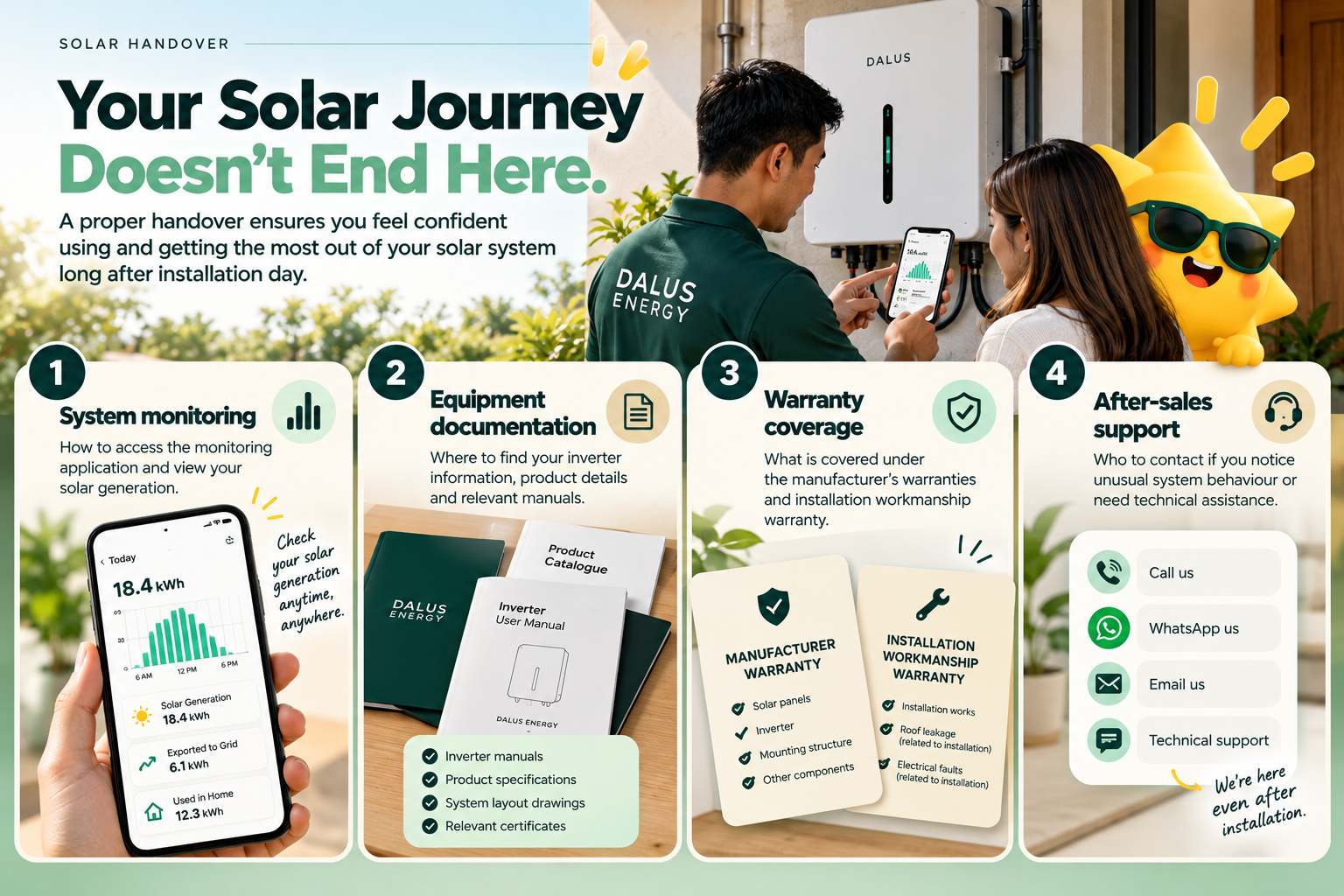
At Dalus Energy, we believe homeowners should feel confident using their solar systems long after installation day.
A Smooth Installation Starts With the Right Process.
A solar installation involves more than the work you see happening on your roof.
From the first site assessment to final commissioning, every stage plays a role in ensuring your system is installed safely and operates as intended.
At Dalus Energy, we believe going solar should feel exciting, not complicated.
We guide homeowners through the process, from initial consultation to installation and after-sales support.