

You installed solar. The panels are generating electricity. So why is your TNB bill still higher than you expected?
You check your monitoring app. Everything looks normal. The sun is shining, your panels are producing electricity, and yet the savings don't seem to match what you had in mind.
Naturally, you start wondering.
Is my solar system underperforming? Was the system too small? Or is something wrong with the installation?
Before assuming the worst, there's something important to understand.
Solar generation and electricity bill savings aren't exactly the same thing.
Let's look at what could be happening.
1. Your Solar Panels Are Generating. But Where Is That Electricity Going?
Here's something many homeowners don't realise.
Generating more solar electricity doesn't automatically mean you're saving more money.
Imagine two houses with identical solar systems.
House A has people working from home. Air conditioners, computers and household appliances are running throughout the day.
House B is empty from morning until evening. Most electricity consumption happens after sunset.
Both houses generate the same amount of solar electricity, but they may see very different savings.
Why?
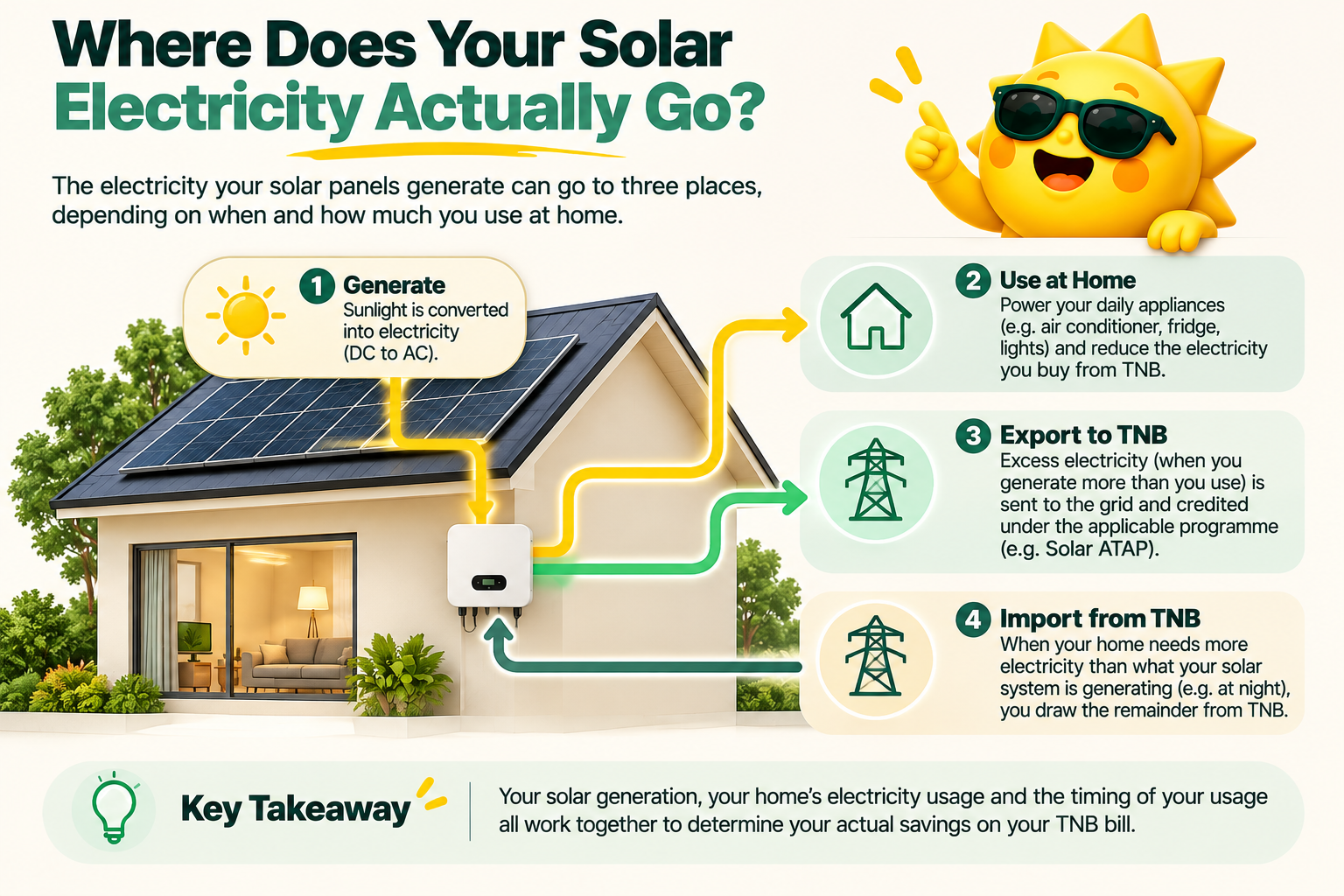
Because electricity generated and consumed directly by your home reduces the electricity you need to purchase from TNB.
Excess electricity may be exported to the grid, but its financial value depends on the applicable solar programme and tariff rules.
Under Malaysia's Solar ATAP framework, exported electricity is credited according to the programme's applicable terms. It shouldn't automatically be treated as having the same value as electricity consumed directly.
The takeaway? It's not just about how much solar you generate. It's also about how much you use and when you use it.
2. Is Your Solar System Actually Underperforming?
Before deciding that your solar panels aren't working properly, ask yourself:
What are you comparing their performance against?
A solar system rated at 10 kWp doesn't mean it will generate 10 kW continuously throughout the day.
Its actual output changes with sunlight, temperature, shading and other operating conditions.
And while your monitoring app might show excellent generation on a sunny afternoon, that doesn't mean every day will produce the same amount of electricity.
A better approach is to compare your system's actual generation against its expected production over a meaningful period.
For example, if your solar proposal estimated 1,200 kWh of generation in a particular month, and your monitoring app shows only 850 kWh, that's worth investigating.
But it doesn't automatically mean something is broken.
Weather conditions, system downtime and other factors may explain part of the difference.
One disappointing day isn't enough to judge your entire solar system.
3. What Could Be Affecting Your Solar Generation?
Sometimes, lower generation is perfectly normal.
Other times, your system might need attention.
Here are a few common reasons.
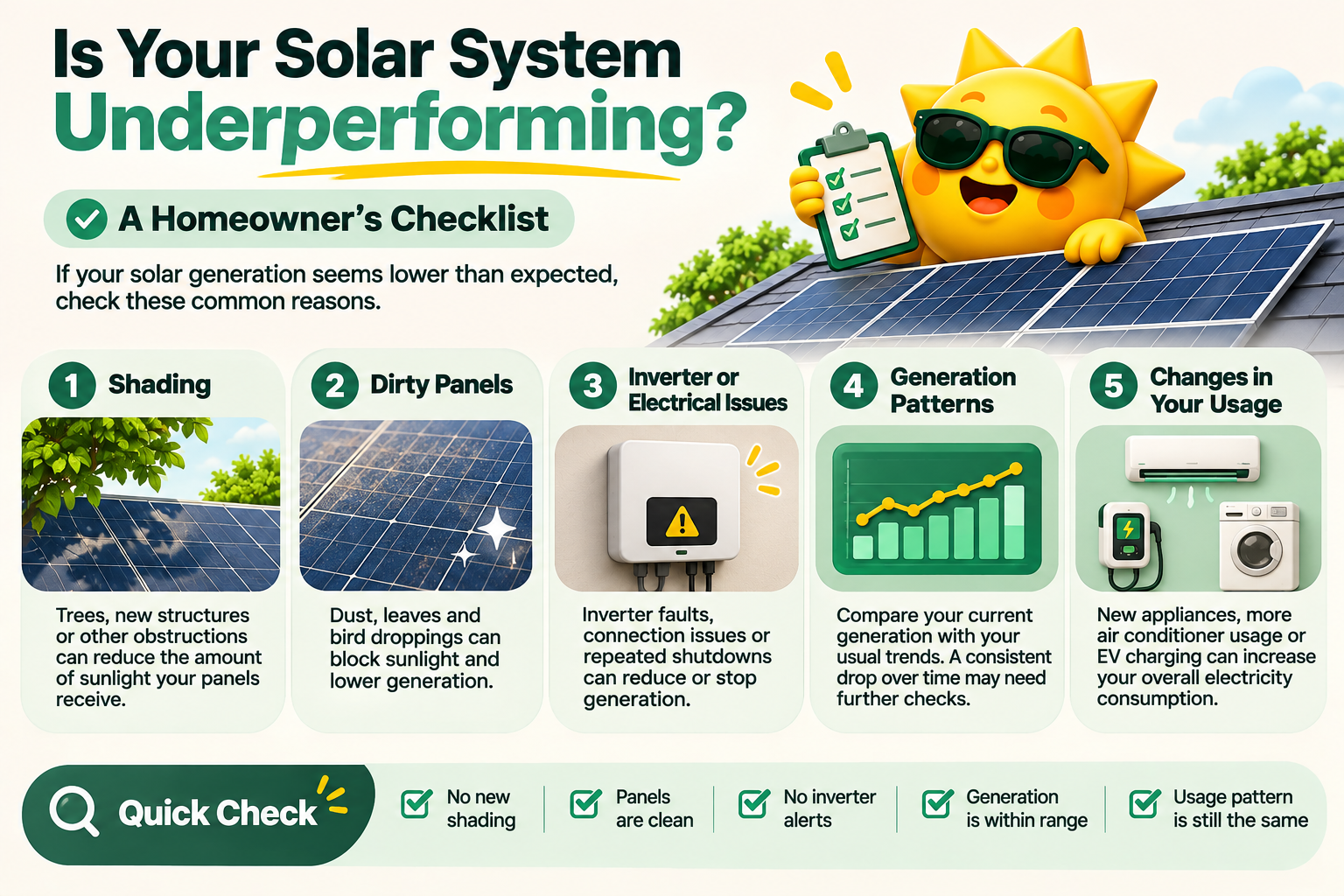
Shading That Wasn't There Before
A growing tree, a new neighbouring structure or even a small obstruction can affect how much sunlight reaches your panels.
Depending on the panel arrangement and inverter configuration, shading on one section can affect the output of other connected panels.
Dirt and Debris
Dust, leaves, bird droppings and other debris can reduce the sunlight reaching your panels.
Malaysia's rainfall helps wash away some surface dirt, but it doesn't guarantee that panels will always remain clean.
Inverter or Electrical Issues
Your inverter plays an essential role in converting solar electricity into usable power.
An inverter fault, connection issue or repeated shutdown can reduce generation or stop it altogether.
Changes in Your Household Consumption
Sometimes, your solar system is performing exactly as expected.
It's your electricity usage that has changed.
Perhaps you've installed another air conditioner, started charging an electric vehicle or begun spending more time at home.
Your solar system may still be offsetting a substantial amount of electricity, but your overall household consumption has increased.
4. Your Solar Monitoring App Tells You More Than You Think
Most modern solar systems come with a monitoring platform that allows you to track electricity generation.
But here's the thing.
A green status indicator doesn't always tell you the whole story.
Your monitoring app may show:
Daily generation: How much electricity your system produced today, measured in kWh.
Monthly generation: Your total production over the month.
Current power: How much electricity the system is producing at that moment, measured in kW.
System alerts: Notifications about faults, interruptions or unusual operating conditions.
Some systems also display household consumption, grid imports and solar exports, but this depends on the monitoring equipment installed.
One useful habit is to look at your generation trends rather than focusing on a single day's performance.
If your system normally produces a certain amount during comparable conditions and suddenly drops significantly, that's a good reason to investigate.
Monitoring helps you spot unusual patterns before they become bigger problems.
5. When Should You Actually Be Concerned?
Not every drop in solar generation is a warning sign.
Cloudy afternoons, rainy days and seasonal weather changes can all affect production.
However, there are situations worth paying attention to.
Your system consistently generates much less than expected.
If actual production remains significantly below realistic estimates over an extended period, further checks may be necessary.
Your inverter repeatedly reports errors.
Occasional alerts may have simple explanations, but persistent faults shouldn't be ignored.
Generation suddenly drops without an obvious reason.
A sharp decline compared with similar weather conditions could indicate a technical issue.
Your system stops generating during normal daylight hours.
If the inverter is offline or the system isn't producing electricity when it reasonably should be, contact your installer.
Remember that monitoring or internet connectivity problems can sometimes make a working system appear offline.
The important thing is knowing when a change is normal and when it deserves attention.
6. What Should You Do If Your Solar System Isn't Performing as Expected?
Start with the basics.
Check your monitoring app for alerts and review your generation history.
Compare your latest TNB bills with your previous consumption, while considering any changes in household electricity usage.
If your system appears to be generating less than expected, contact your solar provider and share the relevant monitoring information.
A qualified technician may need to inspect the inverter, electrical connections, panel conditions or system configuration.
Avoid attempting electrical repairs or climbing onto your roof yourself.
And this is where choosing the right solar provider makes a difference.
At Dalus Energy, we believe installation is only the beginning. Our approach includes system monitoring and proactive maintenance alerts, so potential issues can be identified and addressed rather than left unnoticed.
Because a solar system shouldn't just perform well on installation day.
It should continue working for you in the years ahead.
Don't Judge Your Solar System by Your Bill Alone
Your TNB bill is important, but it doesn't tell the complete story of your solar system's performance.
To understand whether your solar investment is delivering the results you expected, you need to consider three things:
How much electricity your system generates, how your household consumes electricity, and whether your equipment is operating properly.
Sometimes, improving your savings is as simple as changing when you use electricity.
Other times, your system may need professional attention.
The key is knowing the difference.