

30 years. That's longer than some mortgages, longer than most cars last, and probably longer than your current phone will survive.
So, when a solar company tells you that your panels come with a 30-year warranty, it sounds pretty reassuring.
But here's a question worth asking:
Does a 30-year warranty mean your solar panels will last exactly 30 years?
Not quite.
Solar panels are designed to operate for decades, but understanding how they age, what their warranties cover and which components may need replacing can help you make a smarter investment.
Let's break it down.
1. How Long Do Solar Panels Actually Last?
Most modern solar panels are designed to operate for 25–30 years or longer.
But unlike a phone battery that eventually struggles to hold a charge, solar panels don't typically stop working the moment they reach a certain age.
Instead, their electricity-generating performance gradually declines over time.
This means a solar panel that's 25 years old may still be producing electricity, just not quite as much as when it was brand new.
Of course, actual lifespan depends on equipment quality, environmental exposure, installation workmanship and maintenance.
The takeaway? A solar panel's warranty period isn't necessarily its expiry date.
2. Do Solar Panels Lose Efficiency Over Time?
Yes, and it's completely normal.
This gradual reduction in performance is known as solar panel degradation.
Think of it like a car's fuel efficiency changing slightly as it ages. The car still works, but its performance may not be identical to when it was new.
Solar panels behave similarly.
Many modern panels have relatively low annual degradation rates, although the exact figures depend on the manufacturer and technology.
For illustration, let's assume a panel loses 0.4% of its remaining rated output each year.
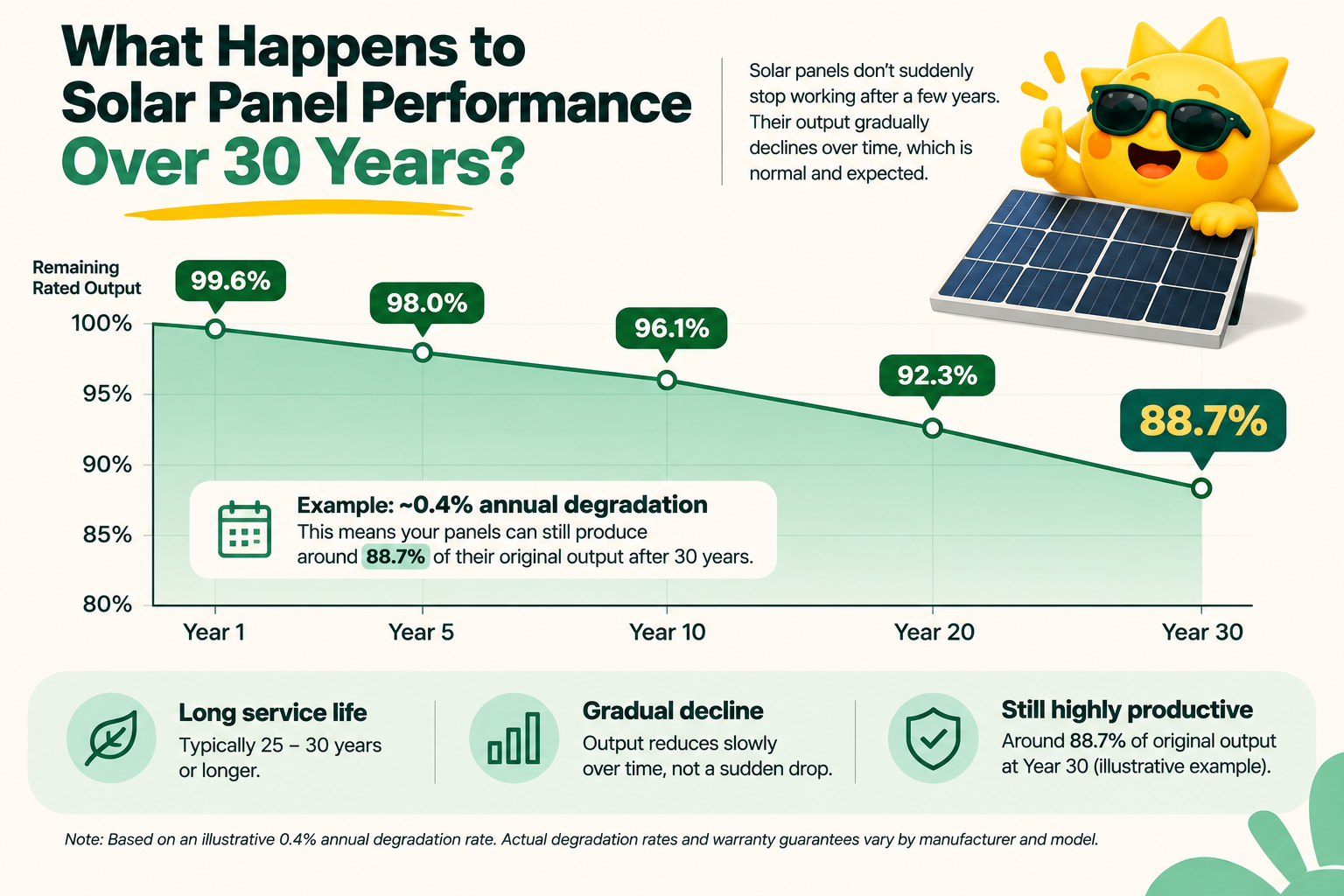
Under this simplified assumption, the panel would retain approximately 88.7% of its original rated output after 30 years.
That's still a substantial amount of generating capability.
However, remember that degradation is only one factor affecting electricity production. Weather, shading, dirt and equipment faults can also influence actual generation.
3. What Does a 30-Year Solar Panel Warranty Actually Cover?
Here's where things get interesting.
Not all solar warranties cover the same thing.
A solar panel may come with a 12-year product warranty and a 30-year performance warranty.
Sounds similar, right?
They're actually two very different forms of protection.
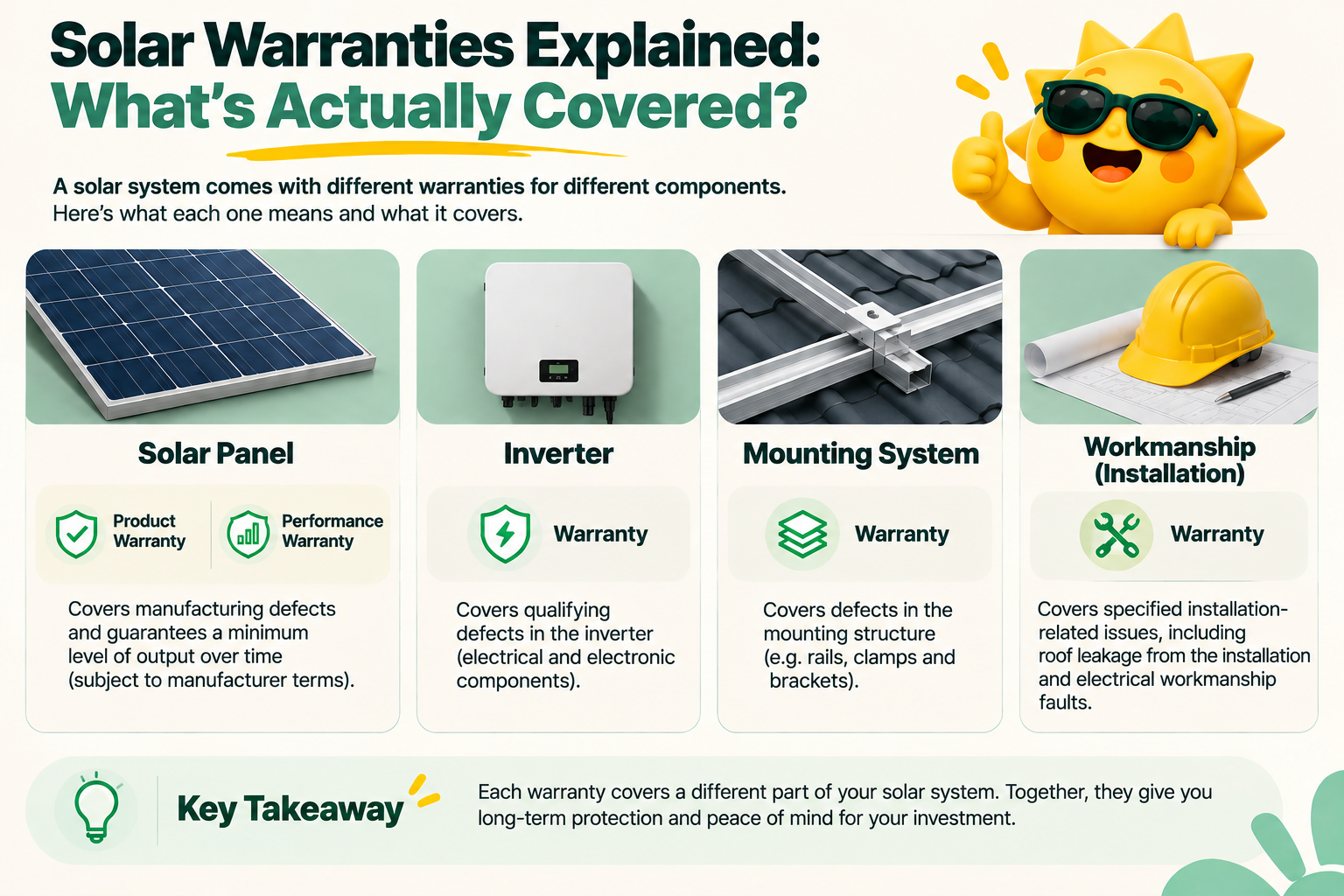
A product warranty generally covers qualifying defects in materials or manufacturing.
A performance warranty, on the other hand, guarantees that the panel will maintain at least a specified percentage of its rated output over a stated period, subject to the manufacturer's terms and testing requirements.
For example, a 30-year performance warranty doesn't mean the manufacturer promises your electricity bill will remain the same for 30 years.
It means the panel must meet the manufacturer's specified performance threshold under the applicable warranty conditions.
Always check the warranty document, not just the number of years advertised.
4. What About the Rest of Your Solar System?
Your solar panels may be designed to operate for decades, but they're only one part of the system.
Your inverter, mounting structure and electrical components also matter.
The inverter converts the electricity generated by your panels into electricity your home can use.
Unlike solar panels, inverters contain electronic components that may require repair or replacement during the system's operating life.
Mounting structures and electrical connections also need to remain secure and in good condition.
For Dalus Energy's standard residential packages, the warranty periods currently offered are:
Solar panels: 12-year product warranty and 30-year linear performance warranty.
Inverter: 10-year warranty.
Mounting system: 10-year warranty.
Installation workmanship: 2-year warranty covering specified roof leakage and installation-related electrical faults.
These periods describe warranty coverage, not guaranteed component lifespans. Coverage is subject to the applicable quotation and warranty terms.
A reliable solar system isn't just about long-lasting panels. It's about every component working together safely.
5. Does Malaysia's Climate Affect Solar Panel Lifespan?
Malaysia's tropical climate presents its own challenges.
High temperatures, humidity, heavy rainfall and prolonged outdoor exposure can place stress on solar equipment over time.
In coastal areas, salt-laden air may also increase corrosion risks for certain components.
That's why equipment selection and installation quality matter.
Properly specified mounting materials, weather-resistant electrical connections and suitable equipment can help reduce the risk of premature deterioration.
Solar panels are built for outdoor conditions, but good engineering helps them withstand those conditions over the long term.
6. How Can You Help Your Solar System Last Longer?
You don't need to climb onto your roof every weekend to look after your solar panels.
In fact, please don't.
A few sensible habits can help you identify problems early:
Monitor your solar generation.
A monitoring app can help you notice unusual changes in system performance.Pay attention to recurring alerts.
Persistent inverter warnings or unexpected shutdowns should be investigated.Arrange inspections when necessary.
Qualified technicians can check electrical connections, mounting conditions and visible equipment deterioration.Keep your warranty documents.
Retain your equipment details, installation records and warranty information for future reference.Most importantly, avoid attempting electrical repairs or rooftop maintenance yourself.
A little attention today can help prevent bigger problems tomorrow.
Solar Is Built for the Long Run
Your solar panels don't suddenly stop working when their warranty expires.
They gradually lose some generating capability over time, while other system components may require maintenance or replacement along the way.
That's why choosing solar shouldn't be based on panel wattage or warranty length alone.
It's about investing in a well-designed system, understanding what you're buying and knowing what support is available after installation.